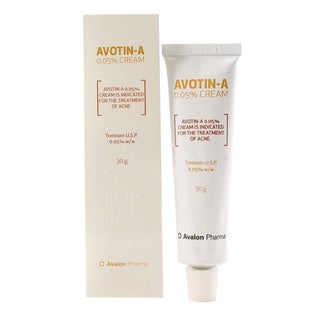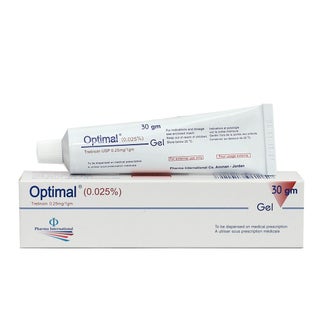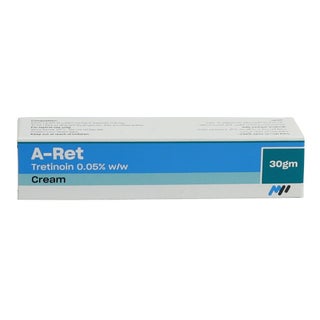


Tretinoin is a prescription-strength topical retinoid derived from vitamin A, prescribed most commonly for acne and, in some cases, for fine wrinkles under dermatological direction. It is a different medicine from over-the-counter retinol, both in potency and in how it is supplied. A dermatologist may assess uneven tone and post-acne marks individually rather than using a one-size-fits-all approach. The tretinoin range on myAster includes Acretin, A-Ret, Avotin-A, and Optimal in cream and gel formats, with labeled strengths such as 0.025% and 0.05%.
The sections explain how tretinoin works, how a prescriber selects strength and format, how to apply it safely, what the adjustment period involves, how purging differs from irritation, which products need careful timing alongside it, and what pregnancy, breastfeeding, and prescription requirements mean for ordering in the UAE.
Tretinoin, chemically known as all-trans retinoic acid, is a prescription topical retinoid. According to the FDA prescribing information published on DailyMed, current evidence indicates that topical tretinoin reduces the cohesiveness of cells lining the follicle and increases their turnover, which affects how readily pores become blocked.
In plainer terms, it changes how quickly surface skin cells are shed and replaced. That process is gradual and continues as long as treatment is maintained. Tretinoin is not a cure for acne, and it does not act immediately, which is why prescribers frame it as ongoing management rather than a short course with a fixed endpoint.
The recognized use across the generic tretinoin cream and gel labeling is the topical treatment of acne vulgaris. Some tretinoin formulations are additionally prescribed for fine wrinkles as part of a wider plan, and a dermatologist will confirm whether that applies to a specific product and to your skin.
Dark spots, post-acne marks and general unevenness fall into a different category. These concerns can have several causes, including post-inflammatory pigmentation, sun exposure, and melasma, and responses to topical treatment vary between individuals. Tretinoin for dark spots and tretinoin for fine lines are frequent searches, but neither outcome can be promised. The labeling itself notes that safety and effectiveness in disorders other than acne have not been established for standard tretinoin acne products. An assessment is the sensible route to realistic expectations.
The brands stocked in this category supply the same active ingredient in different vehicles and labeled strengths.
Prescribers weigh format against skin type, tolerance, the area being treated, and previous retinoid experience.
A higher percentage is not automatically more effective or faster acting, and stepping up a strength independently tends to increase irritation rather than results. The prescriber decides between tretinoin 0.025 and tretinoin 0.05, considering the treatment goal, skin sensitivity or reactivity, whether you've used a retinoid before, the vehicle used, and the level of irritation you're likely to tolerate. Applying more product than prescribed does not add benefit, as the tretinoin labeling states directly.
Follow the prescription and the leaflet supplied with your specific product. The general sequence looks like this:
Tretinoin purging refers to an early increase in spots that some people notice as cell turnover changes. The term is widely used, though clinical evidence defining it is limited, and it should not become a default explanation for every early problem.
Dryness, redness, stinging, burning, and peeling during the first weeks are recognized local effects rather than a sign of progress. The distinction is practical: if a change in your skin is steadily worsening, spreading beyond the treated area, or uncomfortable enough to affect daily life, contact your dermatologist rather than wait it out.
The prescribing information indicates that some results may be noticed within a few weeks, while a longer period is often needed before the effect is apparent.
Local effects reported with topical tretinoin include dryness, itching, burning, stinging, redness, peeling and flaking, and skin may feel temporarily more sensitive to wind, heat and sun.
Contact a clinician promptly if you experience severe or persistent irritation, marked swelling, blistering, crusting, a rash or hives, significant pain, or any reaction suggesting sensitivity to the product. In those situations, you usually pause or review treatment rather than continue.
A gentle moisturizer supports comfort during the adjustment period, and a broad-spectrum sunscreen matters because the labeling advises minimizing exposure to sunlight and sunlamps during treatment. In UAE conditions, where UV levels stay high across much of the year, daily sunscreen plus a hat and shade during peak hours is a practical part of the routine rather than an optional extra.
Air-conditioned interiors and outdoor heat both draw moisture from the skin so that dryness may be more noticeable here than in cooler climates. Keep cleansing mild, skip strong astringents, and do not apply tretinoin to sunburned or eczema-affected skin.
Combinations are possible, but timing and product choice should be decided with your dermatologist. The tretinoin labeling advises caution with topical over-the-counter acne preparations, medicated cleansers, and products containing alcohol or astringents, since irritation may occur.
Products that commonly need specific instructions alongside tretinoin include:
Pregnancy, plans to conceive, and breastfeeding all require a direct conversation with your prescriber before starting or continuing treatment. The European Medicines Agency states that topical retinoids are contraindicated in women who are pregnant or planning a pregnancy as a precaution, and MotherToBaby outlines what is currently known about topical tretinoin in pregnancy and lactation.
Tretinoin is a prescription-only medicine, so you need a valid prescription to buy it in the UAE. Before ordering, check the exact medicine name, format, labeled strength, pack size, and current price against your prescription, and confirm the delivery timeline. Bringing tretinoin, related acne products, and the supporting cleanser, moisturizer, and sunscreen together on myAster keeps the full routine visible in one place. A Dermatology consultation is available when you need to start, adjust, or review treatment.
No. Tretinoin is a prescription-strength retinoid, while retinol is a cosmetic vitamin A derivative sold without a prescription. They differ in potency, regulation, and supervision.
Tretinoin is prescribed mainly for acne, where it affects skin-cell turnover and pore blockage. Use for fine lines or dark spots depends on individual dermatological assessment.
Your prescriber considers the treatment goal, skin sensitivity, previous retinoid use, and the cream or gel base. A higher strength is not automatically more effective.
Improvement is gradual. Some change may appear within a few weeks, though it often takes longer, and results vary by individual.
Purging describes an early increase in spots, while irritation involves dryness, redness, stinging, or peeling. Review worsening or persistent symptoms with your dermatologist.
Yes, and both are commonly advised. A gentle moisturizer supports comfort, and broad-spectrum sunscreen matters because you should minimize sun exposure during treatment.
Yes. Tretinoin is a prescription-only medicine, so you need a valid prescription before it can be dispensed or delivered.
Related Searches: Retinal & Retinol | Dark Spot Correction | Face Wash & Cleansers | Hair Removal Creams | Skin Care | Anti- Ageing









 WhatsApp us
 Contact us