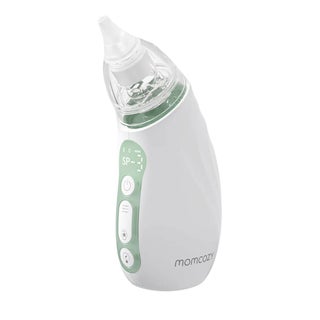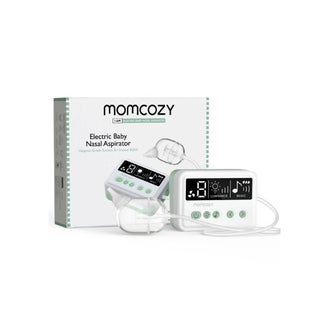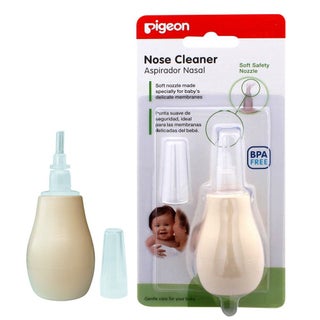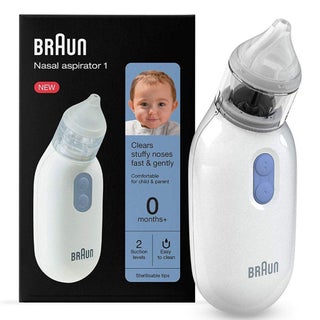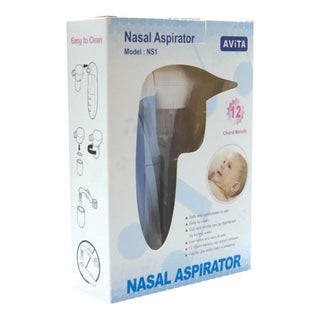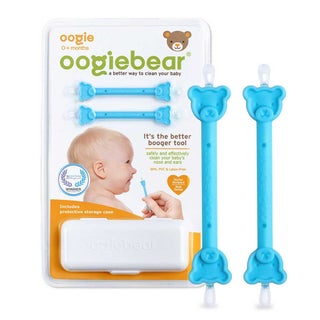




A nasal aspirator is a baby-care device that gently draws visible mucus from a blocked nose when it is used carefully and according to the age guidance and instructions. This page compares the two main types: manual and electric. It explains the features that separate them: suction control, tip size and shape, noise, portability, cleanability, and replacement-part availability. It also covers age suitability, the role of sterile saline, safe tip placement, how often to use suction, and cleaning routines for each part.
myAster lists manual and electric options from Momcozy, Braun, Avita, Ezycare, and Pigeon, along with a nose-cleaning picker that serves a separate purpose. Breathing difficulty, poor feeding, dehydration, unusual sleepiness, or fever in a young infant needs pediatric assessment, not home suction.
A manual nasal aspirator uses a tube and mouthpiece, or a squeeze bulb, so the parent controls the suction directly. That control is its main advantage. It is quiet, needs no charging, packs small for travel, and costs less. The trade-off is that it takes two hands and some technique, and hygiene depends on cleaning every part properly. An electric nasal aspirator applies a set suction level at the press of a button, usually with two or three settings. It is faster and easier to use single-handed, which helps with a wriggling baby. The trade-offs are motor noise that startles some infants, battery or charging needs, and a higher price.
Compare on these points before choosing:
Every model states a minimum age or a suitable-from-birth claim on the box, and the tip size supplied should match that claim. A newborn nasal aspirator needs a small, soft tip and gentle suction, and technique matters more at this age because nasal passages are narrow. A pediatrician should assess premature infants, babies with any breathing condition, babies recovering from surgery, and babies under three months with a fever before using any suction device at home.
The American Academy of Pediatrics describes manual aspirators with a mouthpiece as one option for clearing an infant's nose, alongside bulb suction. If you are unsure whether a device suits your baby's age, check the manual first and ask your pediatrician or pharmacist.
Thick, sticky mucus rarely responds to suction alone. Sterile saline drops or spray thin secretions first, which usually makes suction gentler and shorter. The AAP describes placing plain saline drops in each nostril to loosen congestion, then using suction to draw out the saline and mucus, and notes that doing this shortly before a feed or nap can help a baby eat and rest more comfortably. AAP guidance also stresses using plain saline without added medicine. Use a commercially prepared sterile saline product intended for infants rather than a homemade mixture and follow the drop count, waiting time, and age guidance on that product. Use medicated nasal drops only if a doctor has prescribed them.
Placement is what parents most often get wrong, usually because they are trying harder to clear a stubborn nose. Position your baby with the head supported and slightly raised, never flat on a soft surface. Place the tip at the nostril entrance to create a light seal without pushing inward. Deep insertion is unnecessary since mucus that can be suctioned sits near the opening, and it risks irritating or injuring the lining. Apply gentle suction for a few seconds, release, wipe the tip, then treat the other nostril. Stop immediately if you see any bleeding, if your baby becomes distressed, or if the nostril looks red and swollen. Wipe the skin under the nose afterward and apply a suitable barrier product if repeated wiping makes the area sore.
There is no fixed number of times a nasal suction device should be used in a day. Use suction only when congestion is interfering with feeding, sleeping, or comfortable breathing, not as a routine cleaning habit. Pediatric guidance from Children's Health warns that overuse of a suction device can make the nose swell and worsen congestion, and notes that suction may not be needed at all if a child is eating, sleeping, and playing normally. Suction timed before a feed or before sleep is usually most useful, and suctioning immediately after a feed is best avoided because it can trigger vomiting.
Watch for redness around the nostrils, dryness, blood spotting, or a baby who becomes increasingly upset by the device. If any of these occur, pause and speak to a pediatrician.
Electric units almost always have an electronic body that must never be submerged, along with detachable silicone tips and collection chambers that can be washed.
A workable general routine, subject to your model instructions:
Suction manages visible mucus. It does nothing for the causes of congestion, and some symptoms need urgent attention. Seek urgent medical care if your baby shows labored breathing, ribs pulling in with each breath, flaring nostrils, grunting, wheezing, a bluish tinge to lips or skin, pauses in breathing, unusual sleepiness or floppiness, refusal to feed, fewer wet nappies than usual, or any fever in an infant under three months. Congestion that keeps returning, lasts longer than expected, or is accompanied by a persistent cough also deserves a pediatric review rather than continued home suction.
myAster lists both manual and electric options so you can match the device to your baby's age, your routine, and your comfort with each style. Current brands include Momcozy and Braun for electric units, alongside Avita, Ezycare, and Pigeon for manual and bulb-style baby nose cleaner options, plus a nose-cleaning picker for dried mucus around the nostril, which is a different tool from a suction device. Before you buy a nasal aspirator UAE-wide, check the stated age range, the tip material and size, which parts are washable or sterilizable, and whether replacement tips are stocked. Many parents keep a manual device in the changing bag and an electric one at home.
Neither suits every baby. Manual devices give parent-controlled suction and run quietly, while electric models are faster and easier one-handed but noisier and pricier.
Only if the manufacturer states it is suitable from birth and the tip size matches. A pediatrician should assess premature or unwell newborns first.
Use it only when congestion affects feeding, sleeping, or breathing comfort. Overuse can swell the nasal lining and worsen congestion, so follow pediatric and device guidance.
Dismantle after each use, wash removable tips and chambers in warm, soapy water, sterilize only the parts the manual permits, and air-dry fully before reassembling.
myAster stocks manual and electric nasal aspirators from Momcozy, Braun, Avita, Ezycare and Pigeon, plus a nose-cleaning picker, with UAE-wide delivery.
Related Searches: Baby & Kids Medication | Kids Medical Essentials | Thermometers | Humidifiers & Diffusers | Nebulizers | Avita | Pigeon







 WhatsApp us
 Contact us