
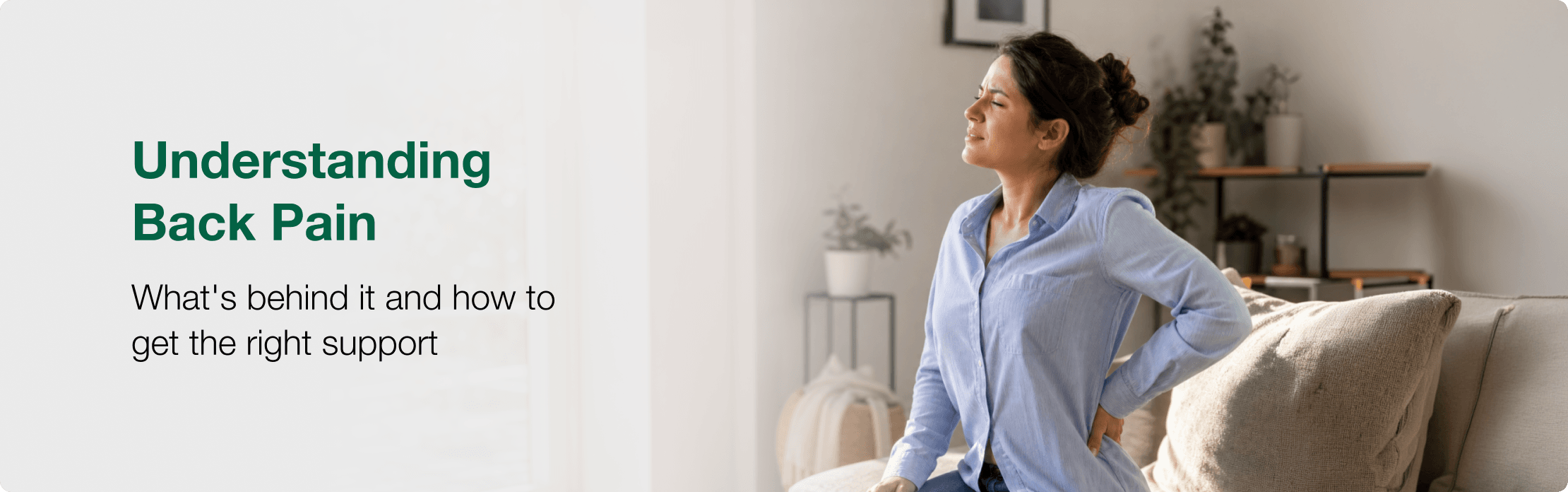
Back pain is discomfort anywhere along your spine, from your neck right down to your lower back. Most of the time it comes from everyday things like poor posture, lifting, or sitting too long. It can range from a dull ache to a sharp, sudden twinge. Most back pain isn't serious and eases with time, but you don't have to manage it on your own.


Back pain is one of the most common health problems, affecting people of all ages and occupations. Lower back pain alone affected 619 million people globally in 2020 and remains the single leading cause of disability worldwide with most people experiencing it at some point in life. It can trace back to muscle strain, poor posture, injury, or an underlying spine condition. In the UAE, desk-bound work and long air-conditioned commutes are common reasons. Many episodes ease with self-care but pain that is persistent, severe or paired with warning signs deserves a proper assessment. At myAster you can recognize your symptoms, understand the likely causes, and book an online doctor consultation or an in-clinic appointment to reach an accurate diagnosis and a personalized treatment plan. Whatever you're dealing with lower back pain, upper back pain, or pain that's radiating and needs a specialist's eye myAster helps you get there. Supportive care is there too, from pain-relief options to physiotherapy at home so you're looked after from the first twinge through to recovery.
Back pain refers to any soreness felt along the spine, from the neck down to the lower back, and it can settle in the upper, middle or lower region. When it lasts for days to a few weeks it's commonly referred to as acute. And when it lasts more than around three months it's referred to as chronic. Depending on where it settles it may alter your ability to bend, lift, sit or sleep. It might settle in the upper, middle, or lower back.
The cause and symptoms vary from person to person. They may manifest as decreased flexibility, muscle tension or spasms, intense or shooting pain or a dull soreness or stiffness. Frequently, movement exacerbates it. Additionally, some patients experience tingling, numbness or pain that radiates down into their legs which may indicate nerve involvement as opposed to a straightforward muscle strain.
About 90% of lower back pain is non-specific meaning no single structure can be pinned down as the source. Muscle strain, bad posture, extended sitting, lifting large objects and sports injuries are typical triggers. Osteoporosis, arthritis, degenerative spine changes or a herniated disc are less common causes. The right treatment depends on identifying the underlying cause, which is exactly why a professional evaluation matters.
These are patterns, not diagnoses so it's best to let a clinician confirm rather than self-label.
The cause and severity determine the course of treatment. Physiotherapy, posture correction, focused stretching, and hot and cold therapy are often the first steps for many patients. When necessary, painkillers may be helpful and systematic rehabilitation gradually restores strength. Specialized care may be required in more difficult or complex conditions. Lower back pain is the condition for which most people may benefit from rehabilitation.
A few good habits protect your spine over the long run.
A few warning signs mean it's time to see a doctor rather than wait it out. For severe or ongoing discomfort, pain following an injury or numbness or paralysis in the legs consult a physician. Evaluation is particularly necessary if you have a fever accompanied with back pain, trouble walking or unexplained weight loss. Loss of control over one's bowels or bladder is an emergency that requires quick medical attention. Instead of waiting it out, get it tested if you're unsure.
Start by finding your symptoms - back pain, lower back pain or upper back pain. Then understand the possible causes. From there, book a consultation with the right doctor or a spine specialist whether online or in a clinic. Receive a personalized diagnosis and treatment plan with follow-up support through recovery. It ties symptom recognition, professional assessment and ongoing care into one place.
Depending on the diagnosis, treatment may include topical painkillers, anti-inflammatory medications, oral painkillers and if necessary, muscle relaxants. The majority of the hard work is frequently done by supportive choices like physiotherapy and rehabilitation. myAster physicians or chemists can advise you on what is best for your circumstances. We don't suggest particular prescription medications or dosages online because your doctor should make that determination.
If back pain is limiting your day or simply refusing to settle speak to an experienced healthcare professional through myAster. Book an online or in-clinic consultation for an accurate diagnosis, a treatment plan built around your cause and severity and support for longer-term back care.
A. Most back pain is non-specific and mechanical, linked to muscle strain, poor posture, prolonged sitting or lifting. Less often it involves a herniated disc, arthritis or degenerative spine changes.
A. Lower back pain is the most common type and usually mechanical. Upper back pain often relates to posture or muscle tension. The cause guides the right treatment approach.
A. See a doctor for severe or persistent pain, pain after injury, leg numbness or weakness, fever, difficulty walking, or unexplained weight loss. Loss of bladder or bowel control needs emergency care.
A. Yes. Physiotherapy is a core part of back pain care, supporting movement, strength and posture. Low back pain is the condition for which most people may benefit from rehabilitation.
A. Maintain good posture, stretch regularly, strengthen your core, use safe lifting technique, stay active, keep healthy weight, and set up an ergonomic workspace to protect your spine.
A. You can book an online or in-clinic consultation through myAster to get an accurate diagnosis, a personalized treatment plan and support for long-term back pain management.
Related Searches: Care Clinic | Tiredness & Fatigue | Depression | Sleep and Stress Management | Headache & Migraine | Panadol